
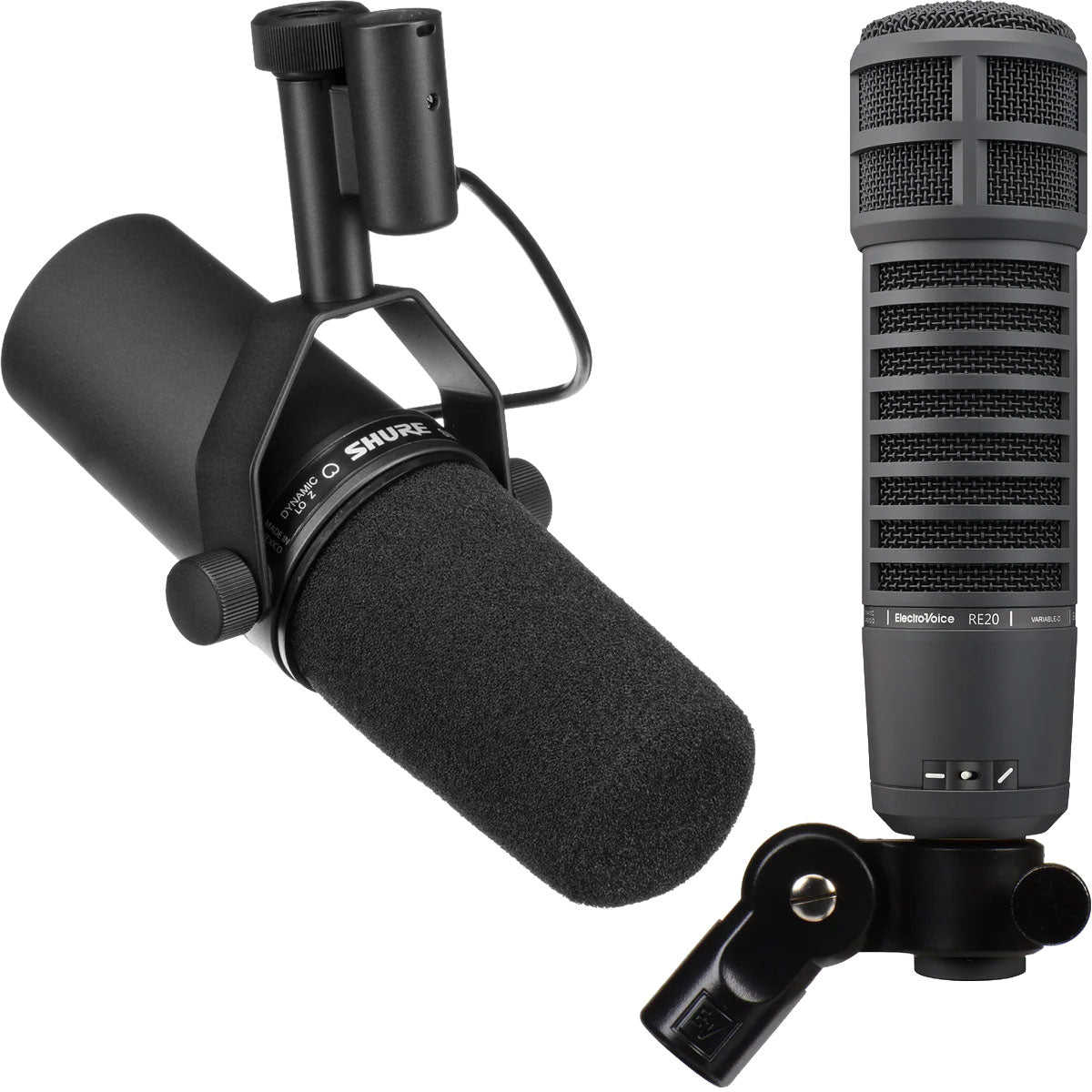
Choosing a podcast microphone is about more than picking a famous name. The Shure SM7B and Electro-Voice RE20 are both dynamic cardioid microphones with long broadcast pedigrees, but their design features solve different recording challenges. Here’s a practical look at what sets them apart.
Two broadcast staples, two different approaches
Both microphones connect over professional three-pin XLR and use a cardioid pickup pattern, making them natural choices for podcasting, voiceover and other close-mic speech. The better fit depends on the sound you want, how you work the mic and whether your audio setup can provide the gain it needs.
Shure SM7B: smooth vocals with hands-on tone controls
The Shure SM7B Cardioid Dynamic Vocal Studio Microphone is designed to deliver smooth, warm vocals for broadcasting, podcasts and studio recording. Its flat, wide-range frequency response is suited to both speech and music, and onboard bass-rolloff and mid-range-emphasis switches let you adjust the response at the microphone.
The SM7B also includes internal shock isolation, a built-in pop filter and shielding against electromagnetic hum from nearby equipment. It ships with both a standard windscreen and an additional close-talk windscreen. One important setup note: Shure says the SM7B works best with a preamp that can provide +60 dB of gain, so check your interface or mixer before choosing it.
Electro-Voice RE20: close-mic control with Variable-D
The Electro-Voice RE20 is a dynamic cardioid broadcast microphone known for its Variable-D design, which is intended to minimize proximity effect as you move closer to or farther from the mic. That can be useful for hosts who shift position while speaking. A heavy-duty internal pop filter and internal element shock mount help manage plosive sounds and vibration, while a mid-bass tone-shaping switch offers another way to tailor the sound.
The RE20 is available in black and fawn beige. Both finishes share the RE20’s core Variable-D design and broadcast-oriented features.
Which one should you choose?
Choose the SM7B if you want onboard bass and presence controls, strong electromagnetic shielding and a mic with a distinctly smooth, warm vocal character. Make sure your preamp has the gain Shure recommends. Choose the RE20 if you value Variable-D proximity-effect control, built-in pop protection and a mid-bass tone switch, especially if you tend to move around the mic while recording.
Neither microphone is a shortcut around room noise or mic technique. Before you decide, consider your recording space, how close you like to speak, your interface’s available gain and the vocal tone you prefer. If possible, listen to both with your own voice and recording chain.
Bottom line: The SM7B gives you useful tone-shaping options and a warm broadcast sound; the RE20 emphasizes consistent close-mic behavior through Variable-D. Both are serious podcast microphones, and the right choice is the one that works best with your voice and setup.